• About
  • Work
  • Blog
  • Contact
Fanbrandz
  • About
  • Work
  • Blog
  • Contact

The Citi Field Experience

Each summer, the All-Star host city provides a unique cultural and visual experience for visiting fans. When exploring how we might best capture the essence of the 2013 site at Citi Field in Flushing, Queens, we traveled to the stadium like most Mets fans–by jumping onto the subway in midtown Manhattan and getting off at the Mets/Willets Point stop. That experience that surrounded us with the mosaic tile art seen throughout the New York City subways, and the broad vistas of the Manhattan skyline and the bridges, combined to capture the visual fabric of a visit to Citi Field and the basis for theme art for the style guide.

Photographing the NYC Skyline and Bridges

In order to obtain original photographic imagery for illustration, we shot the NYC skyline from Willets Point, but due to several visual obstructions, we needed to shoot the downtown area from Jersey City, flop it and stitch it together to form a single, continuous image for illustration reference. The new World Trade Center was still under construction, but we knew it would be visually complete in July 2013, so we relied on Port Authority renderings to include it in the skyline. The bridges were also a bit of a challenge without the use of a helicopter -- but with some very creative thinking by our photographer, Bob Scott, (mostly) legal vantage points were accessed to complete the photo series.

Creating Subway Tile

We studied the many samples of New York subway tiles and mosaic art in the famous connecting tunnels between the 42nd Street Times Square station and Lexington Avenue station and into the surrounding boroughs. We essentially used that influence to design a custom Mets subway platform with various tilework patterns and mosaics to illustrate baseball players. Flexibility is critical if the style guide is to be embraced so the master tile files are completely modular and can be configured for any format.

Primary Logo Components

Aside from the physical and geographic influences, the All-Star logo needed to be firmly rooted in the Mets history with a solution that embraced their colors, typography, their bridge and cityscape. We created a custom large and small cap type font to capture the look and feel of the quirky “NEW YORK” typography. The fonts were then developed as "true fonts" that could be loaded up in designers' font libraries for use in brand messaging for in-stadium signage, print, digital, licensing, etc.

Site Surveys

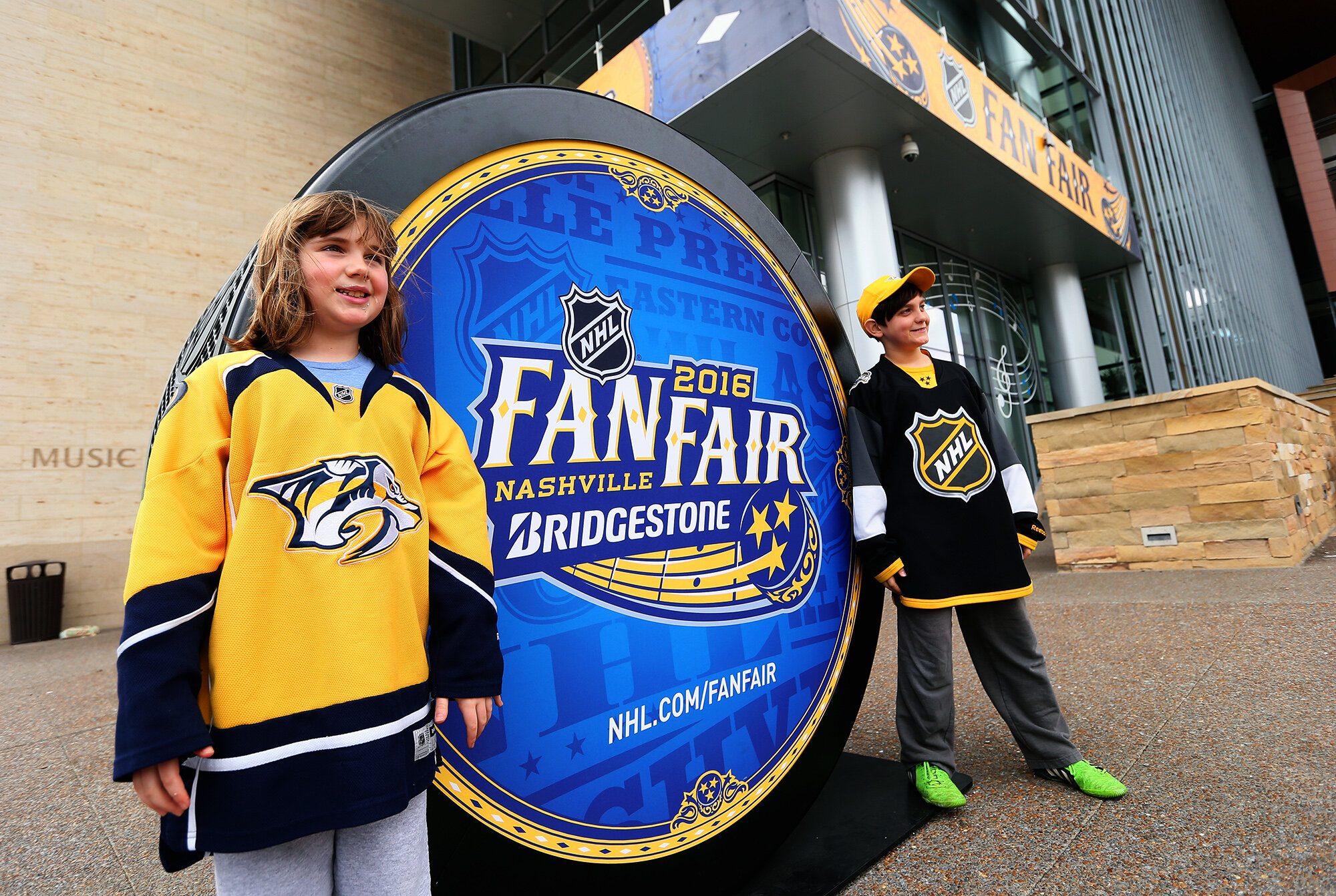
As with most destination marque special events, a site survey prepares us to develop a branding program that reflects the geography, architecture, culture and influences that should inform the program in a way that will resonate with both local and visiting fans. A trip to Ottawa with NHL's creative director, Paul Conway, revealed what Google could not–that the Peace Tower was much more then a tourist spectacle and that it provided a visual reference point from all over the city. The Rideau Canal also proved to be such an integral part of life in the city that detailed daily ice depth measurements are reported for specific sites all along the canal on morning radio throughout the winter season. Searchlights in the night sky near the canal also provided valuable inspiration that would influence the theme art package and get extensive use in the branding program.


Developing Complex Logo Programs

The MLB playoff season presents a peculiar challenge with the need for so many related logos, workmarks and branding elements activated after the end of the regular season. With broadcast partners, clubs, agencies, sponsors, partners, webmasters, media and licensees all clamoring for the many subtle variations within the core family of logos–as well as champions marks for all of the divisions in the two leagues–the program needs to be built with “good bones.” We work hand-in-hand with MLB to build these extensive programs and cannot approach the creative in the traditional method of simply designing a good logo. Instead, we must design a fully functioning graphic system that is expressed by individual logos.

NOTE: The Giants defeated the American League Champion Texas Rangers, four games to one.


Durable Logo Systems

Very few logo and branding systems are translated in so many mediums as are professional sport playoff programs. Logos are reproduced on vinyl wraps that face an entire side of a building while another licensee is casting the same logo as a tiny metal engraving for a pin. Broadcast animators are creating dynamic "builds" for televised bump in's while a web designer is creating social media graphics. These sorts of rigors aggressively test a logo system. We have worked with MLB to develop a range of design rules and aesthetics that ensure the "durability" of these hard working logos because, without reliable art, the brand control is lost due to loss of continuity 


1992-2014

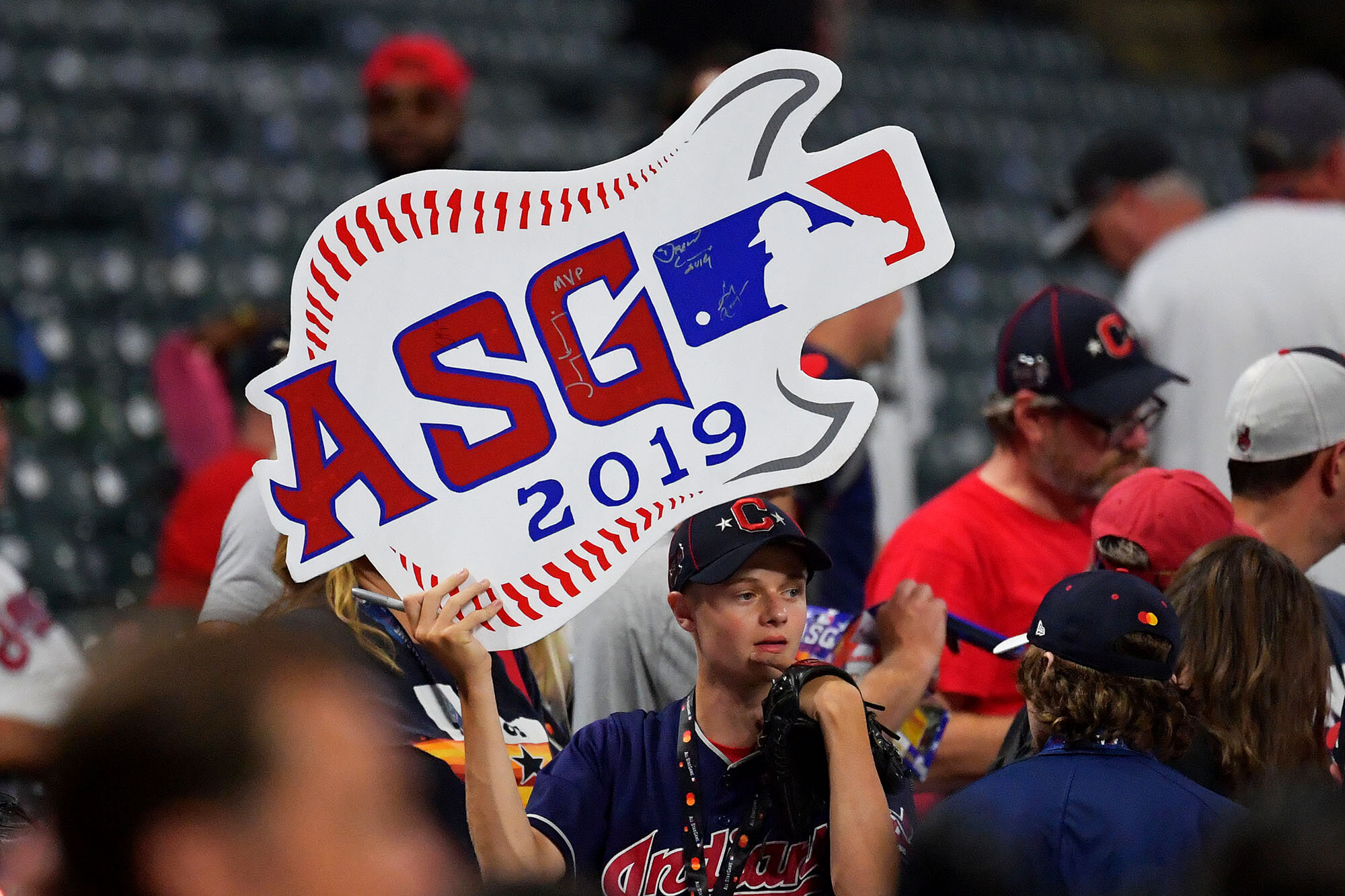
With a reoccurring marque event such as Major League Baseball's All-Star Game, the annual branding challenge we face is to capture the unique personality of each event and location with an identity that genuinely connects with fans and stakeholders.

Architectural ballpark details, mountains, desserts or signature friezes,  -each host club and location offers a "hook" that we look to build our programs around. 


Custom Fonts as Branding Tools

We develop custom font families for brands that must be extended day in and day out by brand owners.  They build brand continuity while reducing design time and costs when generating lots of messaging.

We design custom typography in-house as well as working with long-time colleagues Skye Dillon, Kelly Hume, Brian Casscles and Todd Radom. Our font packages include a range of minor punctuation -which now always includes a #hashtag.

Major League Franchise Identities

Event Player Art

We include robust theme art collections as an integral part of branding architecture -particularly when branding a special event. Player art is just one example of theme art that enhances the multitude of design communications generated around an event such as programs, tickets, web banners, in-stadium deco, ads and promos, digital signage, web etc.

We have in-studio illustrators as well as working with specialist illustrators from across the country. 


Reinterpreting a Ray

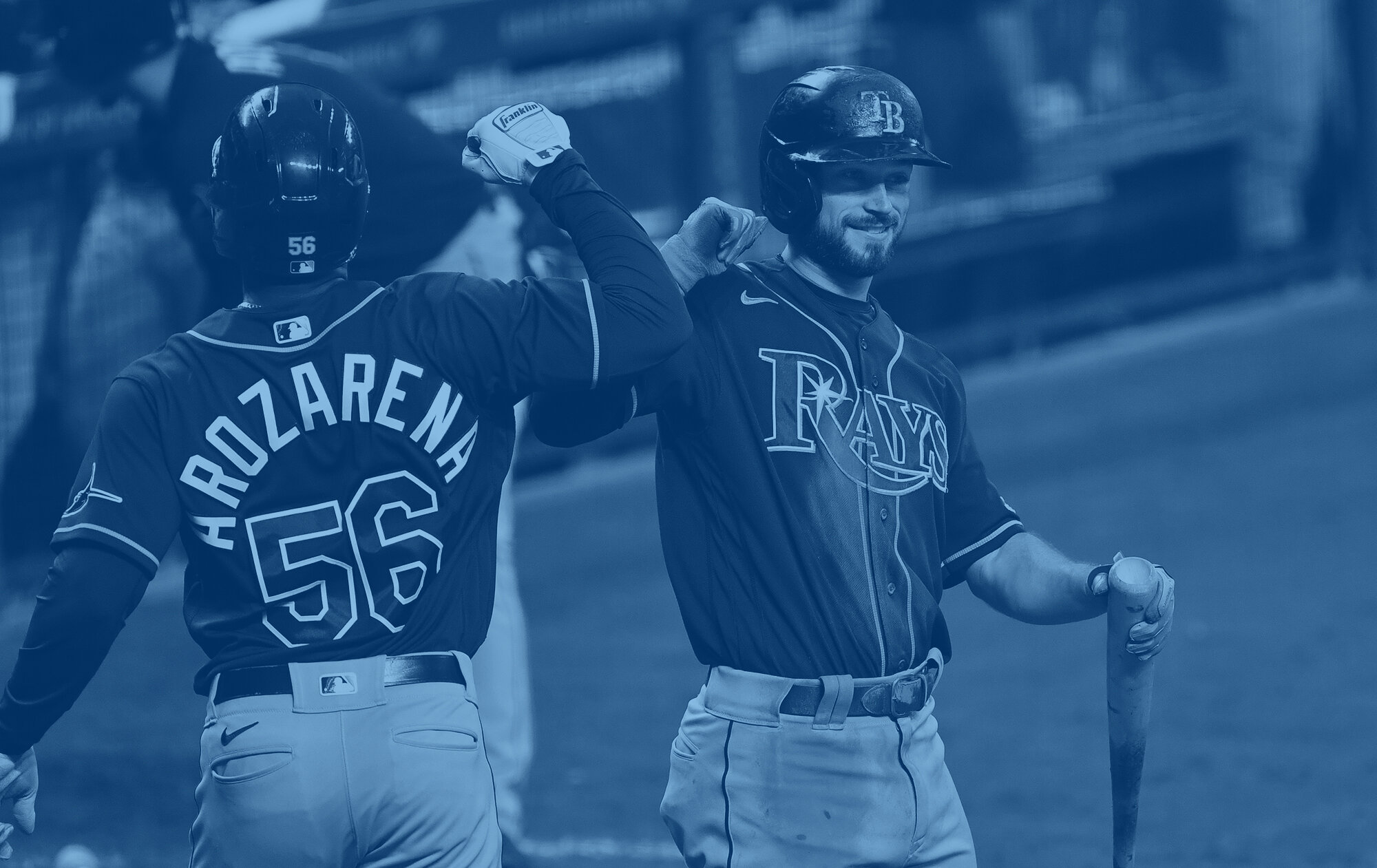
The Tampa Bay Devils Rays had been in a deep rut for many years, so when New Yorker, Stuart Sternberg purchased the franchise, he immediately went to work with Matt Silverman to make changes throughout the organization. One of those changes would be to reinterpret the name "Ray" that was associated with the sting ray-like fish to the more ethereal image of a “ray of Florida sunshine.” 

We worked closely with Major League Baseball's creative Services VP Anne Occi and develop hundreds of sketches that pursued an increasingly no-nonsense, refined approach. The final uniform program was strikingly elegant without any unnecessary flourishes. The uniform script was based on classic typographic forms with a  glint of sunlight signifying the “ray” and scaled with restraint within the counter of the “R”. The new look signaled a new era for the ball club. Along with changes in the clubhouse, the Rays came out of Spring Training with a new attitude and a new game. From last in the league, the Rays battled through the season, winning the American League East pennant, and then onto the biggest stage in Major League Baseball–the World Series. While they could not put down the Phillies for the trophy, the Rays had risen from “worst to first”.

Exerp from Jonah Keri’s book “The Extra 2%.” chronicling the Rays' Revolution.

"Back at the drawing board, the team leaned on Frederick & Froberg (Fanbrandz), hoping to find a workable idea in a short time frame ... to shift from fish to feeling, the team turned to Principal Bill Frederick ... just as the Anaheim Ducks had called on Frederick to chase away the ghost of Emilio Estevez, the Rays asked him to help them rid themselves of the Devils for good." 


Branding a New Classic

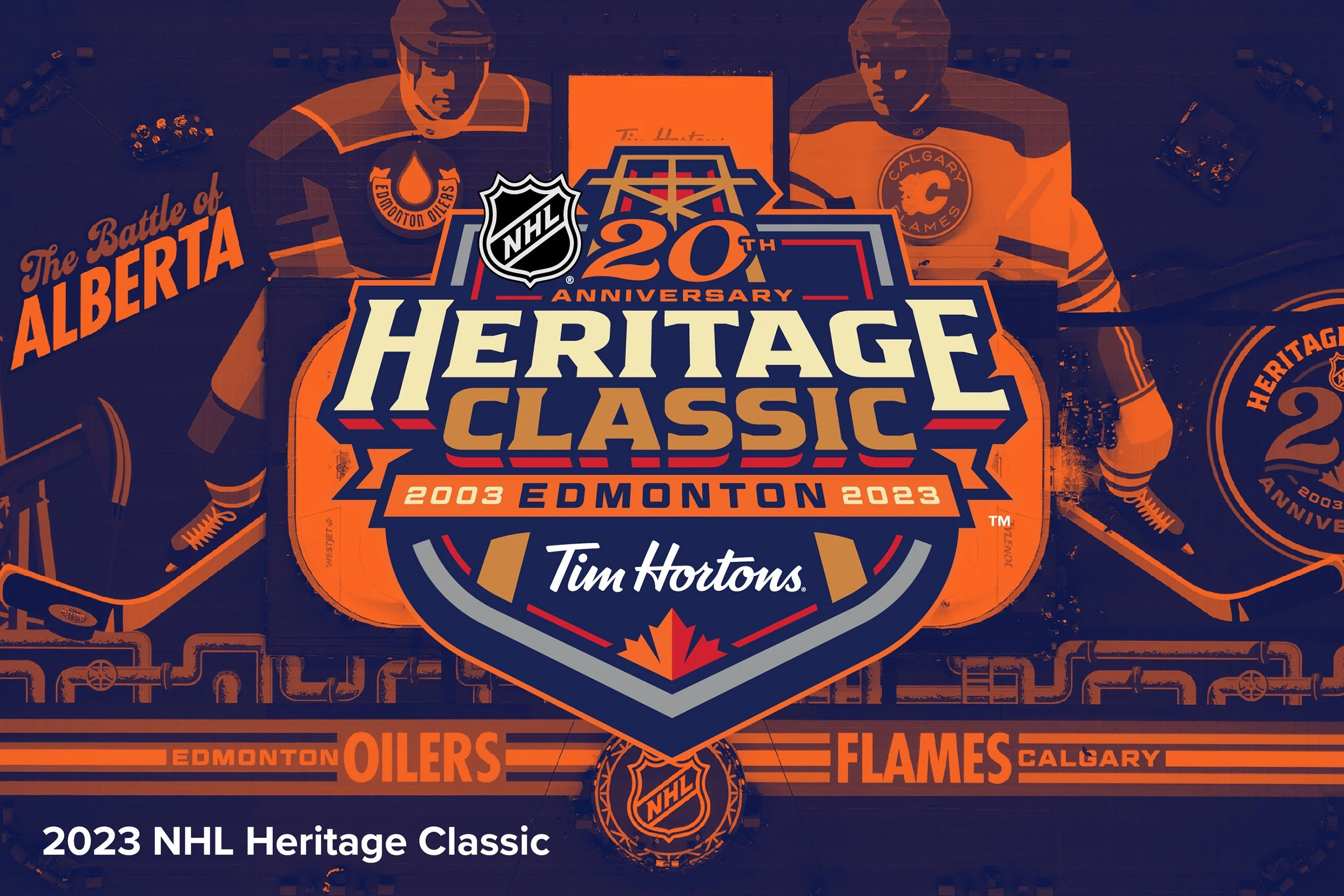
The Winter Classic has become a new marque sports classic for NHL. The throwback sweaters and open air rinks provide a unique experience that conjures up the beginnings of the sport. Fans agree with their wallets and attendance and broadcast ratings are off the charts.  We have been fortunate enough to work with NHL and Creative Director, Paul Conway to develop the last four NHL Winter Classic special event branding systems. They include the 2009 game at Wrigley Field, 2010 at Fenway Park, 2011 at Heinz Field in Pittsburgh and 2012 at Citizens Bank Park in Philadelphia.

The branding packages are developed for activation in broadcast, venue deco, event signage, tickets, programs, digital, web, sponsor promotions and licensing.


Astro Turf Photo Wall

Fueled by social media and filtered app based photography. Come on down and see the studio. Strike your best pose and get featured on the photo wall!


Virtual Site Surveys

Saddleback Mountain, Phoenix, Arizona

The concept of foreseeing how shadows will fall on Saddleback Mountain as viewed from the Arizona Diamondbacks stadium at the exact time of the first pitch of the All-Star Game (7PM) -- a full year and a half in the future -- would have been something you would need a buddy at NASA to find out just a few years ago.

We rely on Google Earth's magic to check on geography, relative locations, and, yes, views at exact moments in the future. Google Earth's extraordinary virtual model maps the Earth by the superimposition of images obtained from satellite imagery, aerial photography and GIS 3Dglobe. 


Virtual Kayaking at All-Star, San Francisco

When designing the logo for the 2007 All-Star Game in San Francisco, we were working with illustrations from Michael Schwab and wanted to add some motion to the sentimental mood of the exterior stadium illustration.

We decided to include the signature home run over the wall and into the water where fans famously wait in kayaks for the collectable balls. The accuracy of where the ball fell needed to be spot-on because if we missed the placement, the ball would be a foul rather than a home run and we know just how knowledgeable fans are.

Google Earth allowed us to replicate the view point of the stadium and then create trajectories from home plate between first and second bases, over the wall and into the water. The splashing ball graphic

that we created became widely used in licensing and as an outfield graphic created by the mowers. 


All-Star Game, Ottawa

In the case of Ottawa, we wanted to compress the Ridaeu Canal and the Peace Tower into a single scene for theme art but wanted to be accurate. Google Earth allowed us to "fly" around the canal until we found the line-up. 


From Disney to Champions

An Extraordinary Season

During the 2006 offseason, heading into the team's 14th NHL campaign, with the franchise still lacking a division title let alone a Stanley Cup victory, new owner’s Henry and Susan Samueli wanted to change their team name, logo system, player uniforms, and overall approach to winning a championship.

The first decision was to drop their Disney movie-inspired name, "Mighty Ducks of Anaheim," with the identity's eggplant purples and greens, for a simpler and more refined "Anaheim Ducks" identity, to better reflect the lifestyle of Orange County. 

The design process took place over an aggressive timeline that required bi-weekly meetings in Newport Beach with the entire management team and owners. 

The final designs replaced the old color palette with vibrant new system of jerseys and logos, with jet blacks, luscious golds and refined orange trim. The cartoon duck image was replaced with a “D” formed by the shape of a duck’s foot. The identity was unveiled on June 23, 2006, Bill Frederick was qouted in the Orange County Register.

After a landmark trade that secured dynamo defenseman Chris Pronger, the 2nd overall pick in the 1993 NHL Draft, from the Edmonton Oilers, the Ducks headed into the 2006-2007 season an NHL favorite to hoist Lord Stanley's Cup.

Led by the bearded netminder, J. S. Giguere, offensive superstar Teemu Selane's 94 regular season points, and a defensive unit that included the Neidermayer brothers, the Ducks went on to rack up 110 points in the regular season, and eventually win the Stanley Cup, with a playoff record of 16-5.

The following season, the Ducks would set a franchise record for highest home-game attendance average per season, with 17,193 tickets sold per game, the team's highest numbers since 1996.

Orange County Flavor

When developing the look and feel for the All-Star Game hosted by the California Angels of Anaheim, we turned to illustrator Nancy Stahl to create a series of images that we could build into a branding system. We tapped into the rich history of orange groves and fruit crate labels for inspiration for the program. The event was executed brilliantly including an amazing use of the logo rendered in flower pedals on a rose parade float.

To see more of Nancy’s work, visit http://nancystahl.com


Uncovering the Brand DNA


Motorsports Branding

Our involvement with motorsports began with Kyle Petty while he was sponsored by Mattel's Hot Wheels brand. We did a whole range of design work including the 44 car deco. We soon found ourselves in the NASCAR office in New York developing a series of brochures that explained the complex sponsorship opportunities that are associated with the driver, the car, the track, the race, etc. 

2009 World Series Logo and Style Guide

The 2009 Postseason program was a favorite of ours for a number of reasons, not least of which, that it was played in our backyard in Yankee Stadium.  With the Yankee win, we can hardly ride a subway or walk a Manhattan street without seeing someone wearing a NY cap with the WS09 logo embroidered on the side.


Hang Gliding, Kite Boarding and Kites

What could be better than kayaking, kiteboarding, and hang gliding off the Outer Banks of North Carolina? It’s all part of the process when developing a new identity for Kitty Hawk Kites. Working with owner John Harris and his team at KHK was a blast. The logo and sub brands were inspired by all the primary elements of KHK and the Outer Banks: surf, sand, and a sense of adventure. We then applied a complimentary identity and key messaging to billboards, advertising, vehicles, websites, catalogs, and brochures.


The Citi Field Experience

— view —

Fanbrandz_Tile_1_C.jpg

Site Surveys

— view —

Fanbrandz_Tile_10_C.jpg

Developing Complex Logo Programs

— view —

Fanbrandz_Tile_3_D.jpg

Durable Logo Systems

— view —

Fanbrandz_Tile_3_BB.jpg

1992-2014

— view —

ASG_Identities_MainTile_R2.jpg

Custom Fonts as Branding Tools

— view —

Fanbrandz_Tile_4_C.jpg

Major League Franchise Identities

— view —

Fanbrandz_FeatureSimple_5A.jpg

Event Player Art

— view —

Fanbrandz_Tile_2_A.jpg

Reinterpreting a Ray

— view —

Fanbrandz_Tile_7_A.jpg

Branding a New Classic

— view —

Fanbrandz_Tile_8_B.jpg

Astro Turf Photo Wall

— view —

Fanbrandz-Astro_Turf_Wall.jpg

Virtual Site Surveys

— view —

Google_Earth_Sports_BrandingA.jpg

From Disney to Champions

— view —

Ducks__Anaheim_Tile.jpg

Orange County Flavor

— view —

Fanbrandz_Tile_14_A.jpg

Uncovering the Brand DNA

— view —

Fanbrandz_16_Archaeology.jpg

Motorsports Branding

— view —

Motorsport_Tile_Update.jpg

2009 World Series Logo and Style Guide

— view —

Fanbrandz_Tile_15_A.jpg

Hang Gliding, Kite Boarding and Kites

— view —

Fanbrandz_Tile_13_B.jpg